3D Printing

dqMODELS offer 3D printed models, using FDM and STL 3D printing techniques.

View projects

What is 3D Printing?

The models themselves are first constructed in computer 3D, using software such as Blender. A piece of software called a ‘slicer’ then breaks the 3D computer models up into components to be printed.

There are two main types of 3D printing:

FDM (Fused Deposition Modelling) and STL (Stereo Lithography).

FDM printing

FDM printing heats a plastic filament and squeezes it onto a steel plate in layers to slowly build up the 3D print. The FDM plastic is predominantly based on corn-starch, so the plastic created can be recycled.
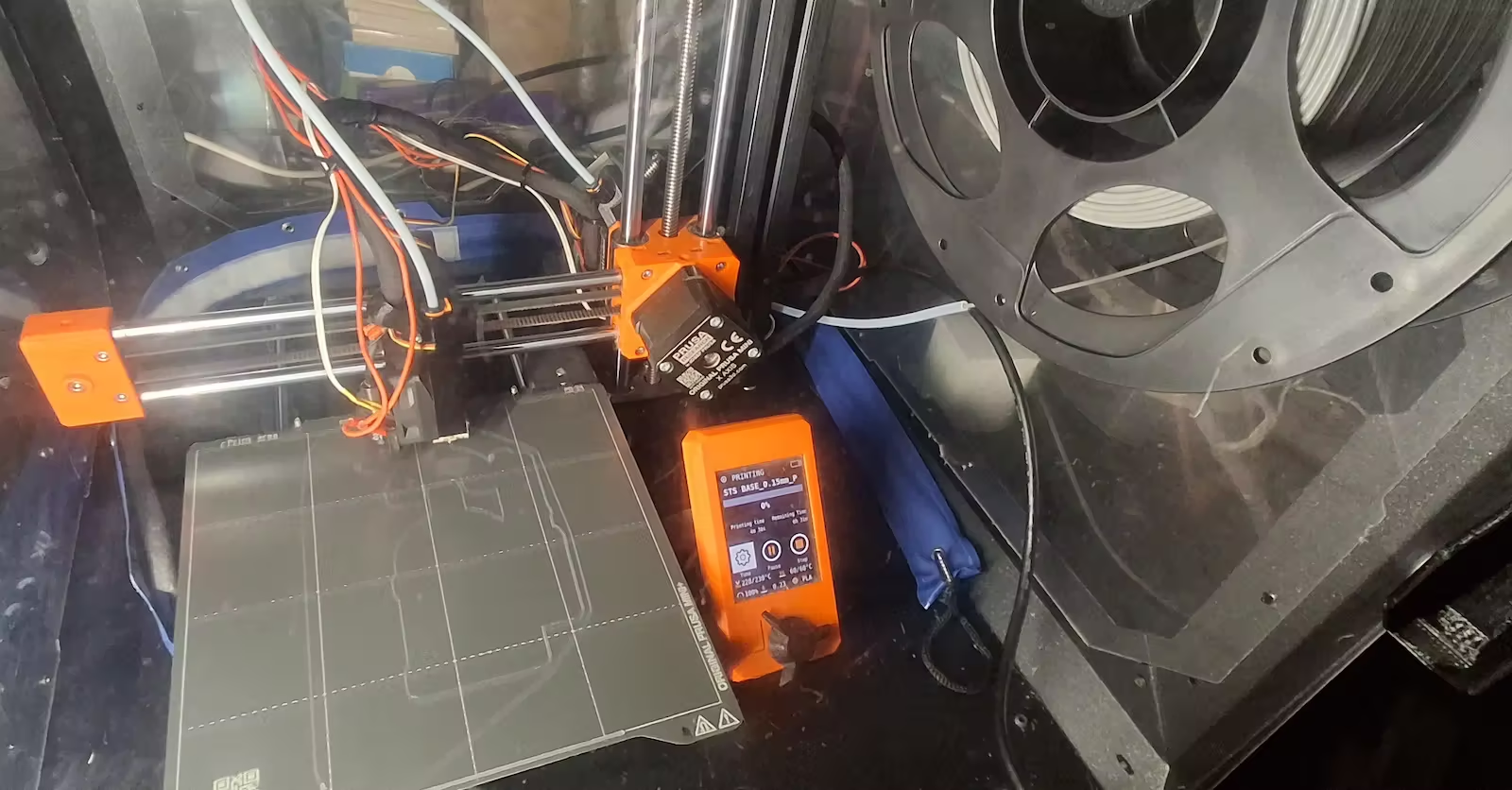
In FDM printing, a filament is heated to form the print on a flat steel sheet.
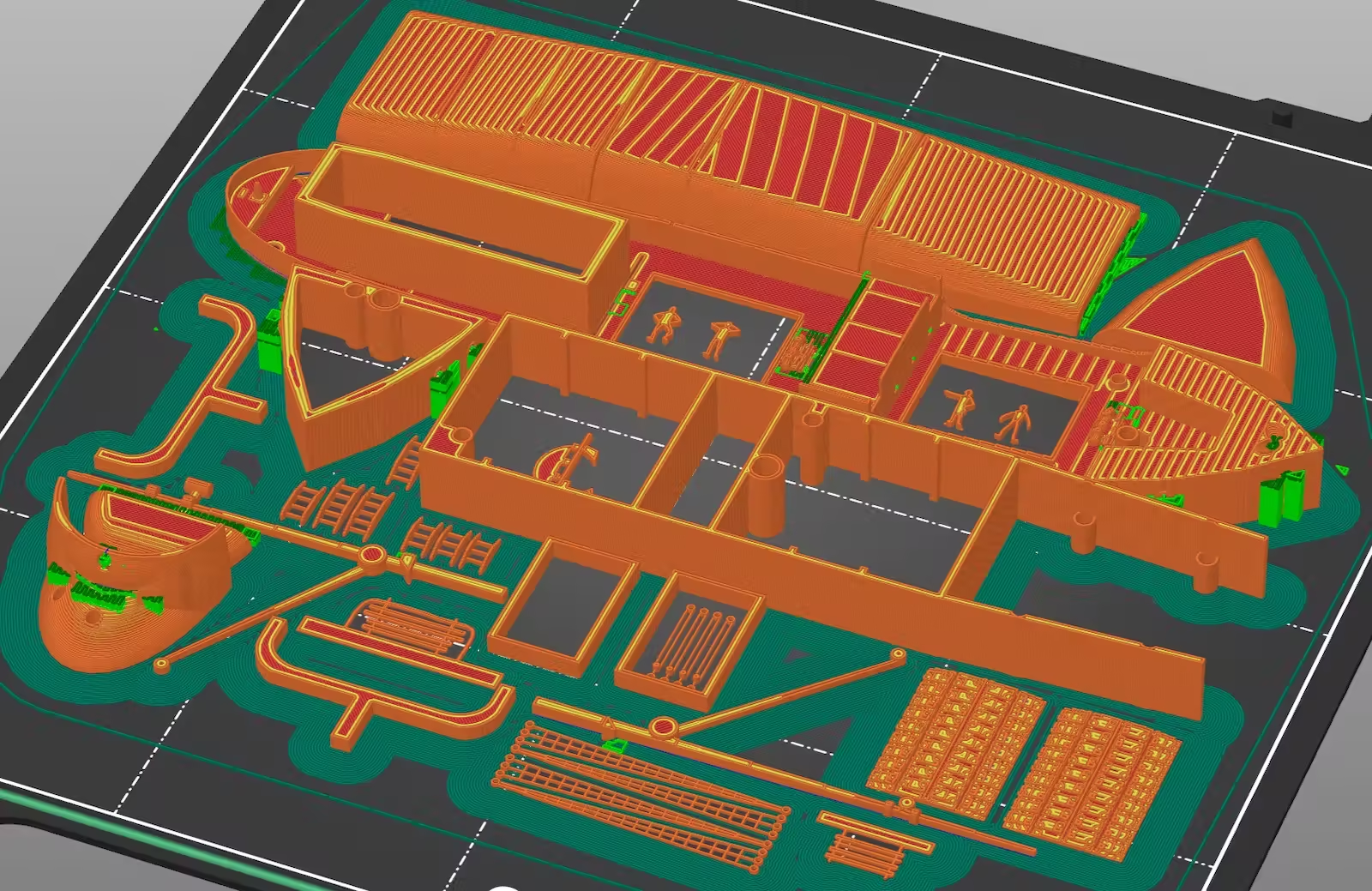
For FDM prints, the slicer prepares the model to print across a flat steel sheet.
STL printing

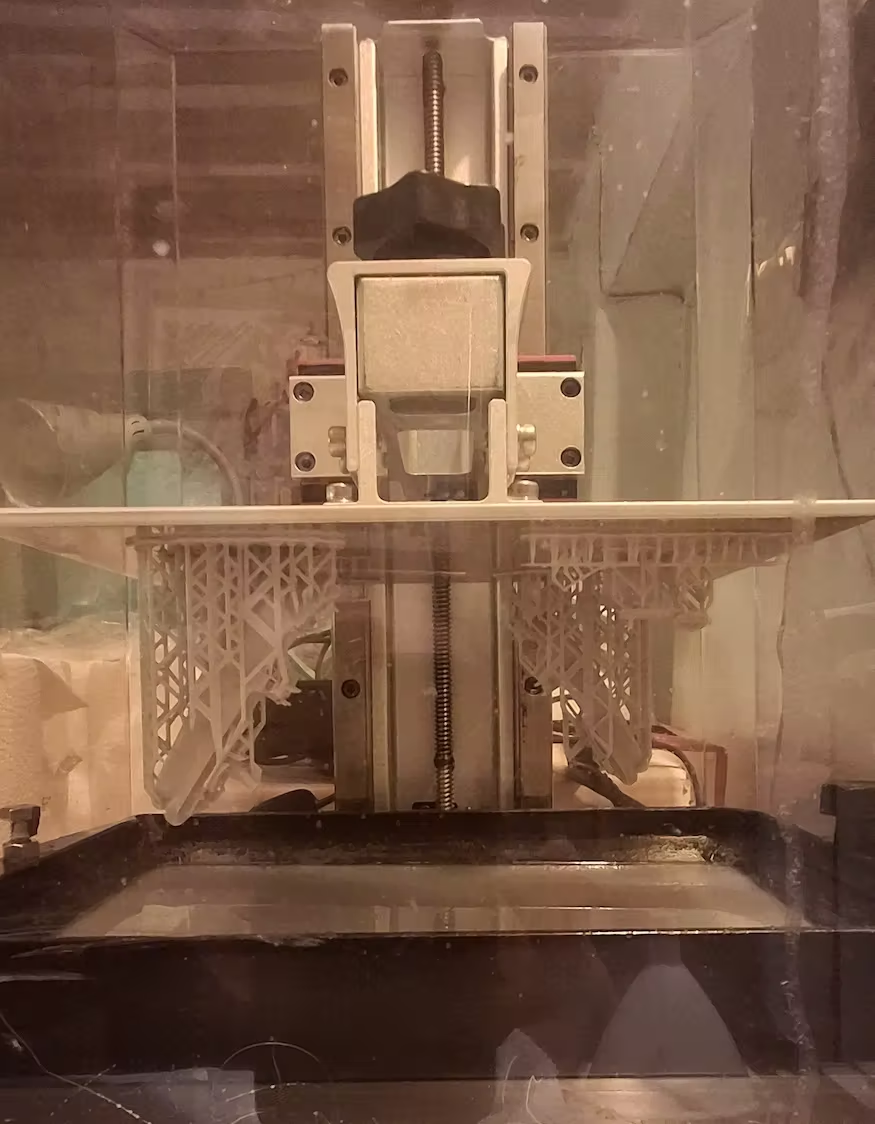
STL printing uses a photosensitive nylon resin and prints components in layers by breaking the model down into thin sections (rather like a CAT scan). STL plastic can be tough, but it’s generally not recyclable

In STL printing, light is used to print the model from a bath of photosensitive nylon resin.
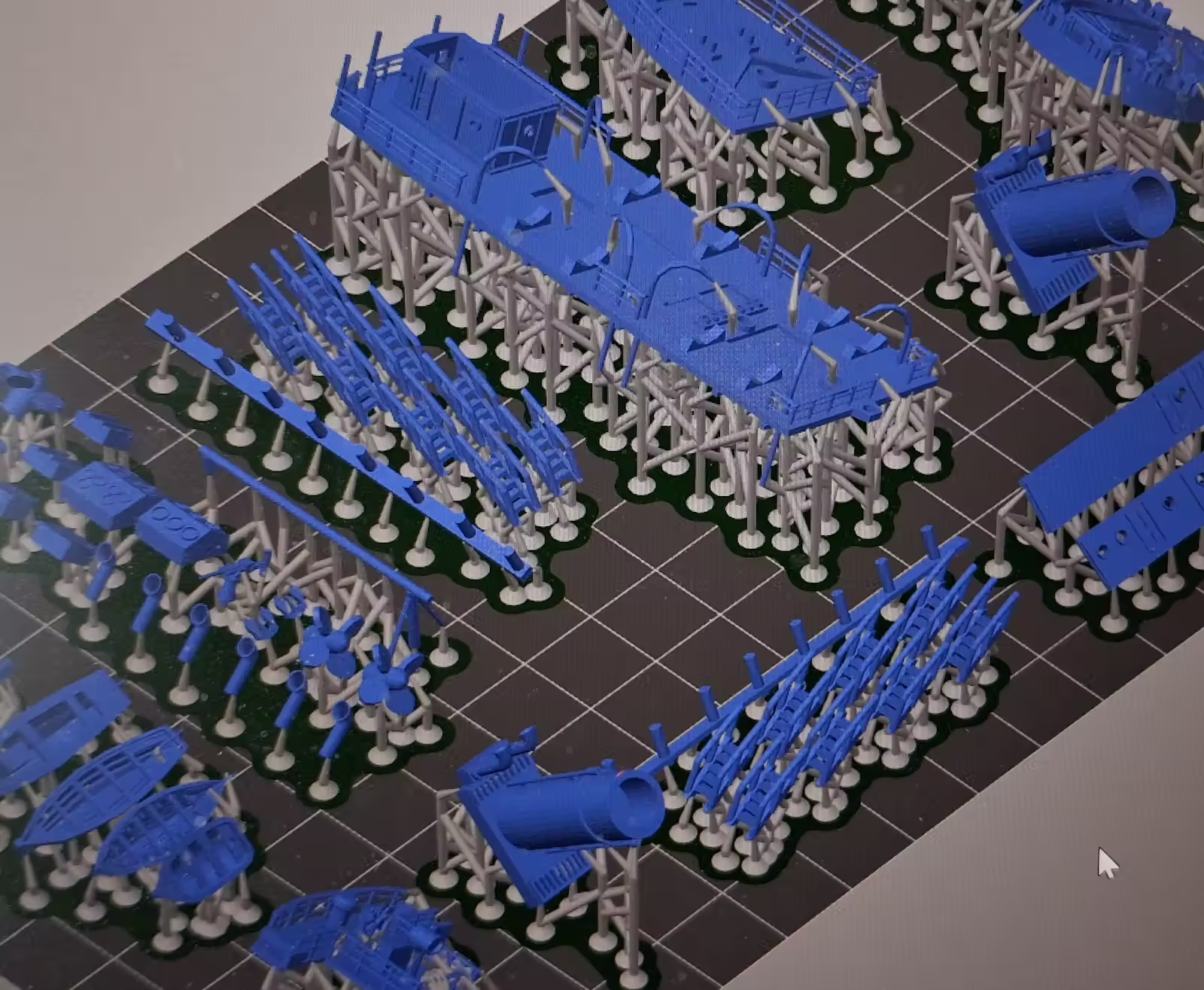
For STL prints, the slicer automatically supports delicate parts of the print using support trees.

How is 3D Printing different to airfix-style kits?

Many mass-market kits are injection moulded, using very expensive machines and steel moulds. This means that hundreds of thousands of the models need to be produced in order to make them cheap enough to sell. Huge print runs mean that it’s difficult to produce models of rare or unusual subjects. Injection moulding also uses a petroleum-based polystyrene.